
In this comprehensive guide, we’ll explore how to assess the ROI of BI consulting and data integration services, outline the key metrics, share real-world examples, and explain why a strong ROI is more than just a financial figure.
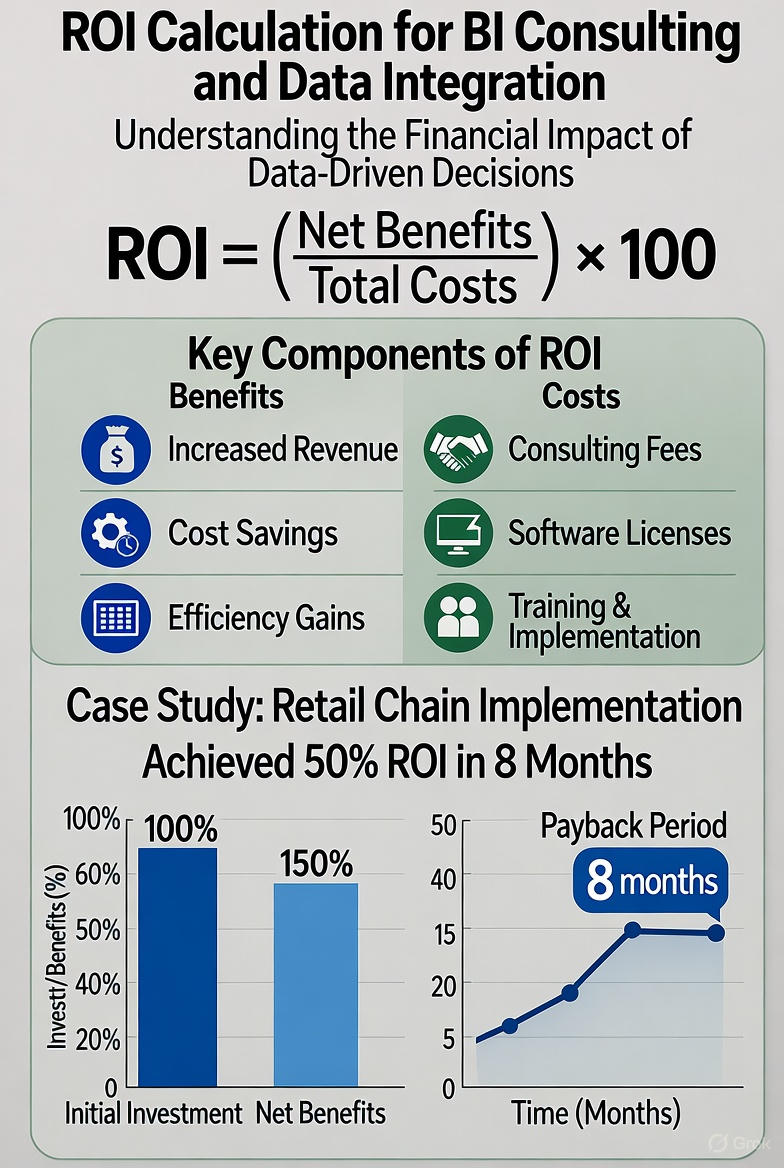
1. Understanding ROI in the BI Context
ROI, in its simplest form, is:
However, in BI projects, “Net Benefits” include more than direct revenue as it also accounts for:
Time savings from automation
Operational efficiency from better workflows
Decision quality improvements through accurate insights
Risk mitigation due to enhanced governance and compliance
For example, integrating your ERP, CRM, and POS systems into Power BI can cut weekly reporting time from 15 hours to 3 hours—a cost saving that directly impacts profitability.
2. Costs to Consider in ROI Calculations
Before estimating returns, you must establish a realistic cost baseline. These typically include:
BI Consulting Fees
Strategy workshops
Requirements gathering
Solution architecture
Custom dashboard development
Data Integration Costs
Data pipeline design
ETL (Extract, Transform, Load) process implementation
Data quality improvement
Technology and Licensing Costs
BI platform licenses (e.g., Power BI Pro or Premium)
Cloud storage and compute costs
APIs and connectors
Training and Change Management
Upskilling employees on the BI tools
Establishing data literacy programs
Ongoing Maintenance
Performance tuning
Adding new data sources
Support contracts
Tip: Avoid underestimating ongoing costs—they can be 15–20% of your initial investment per year.
3. Tangible Benefits of BI Consulting & Data Integration
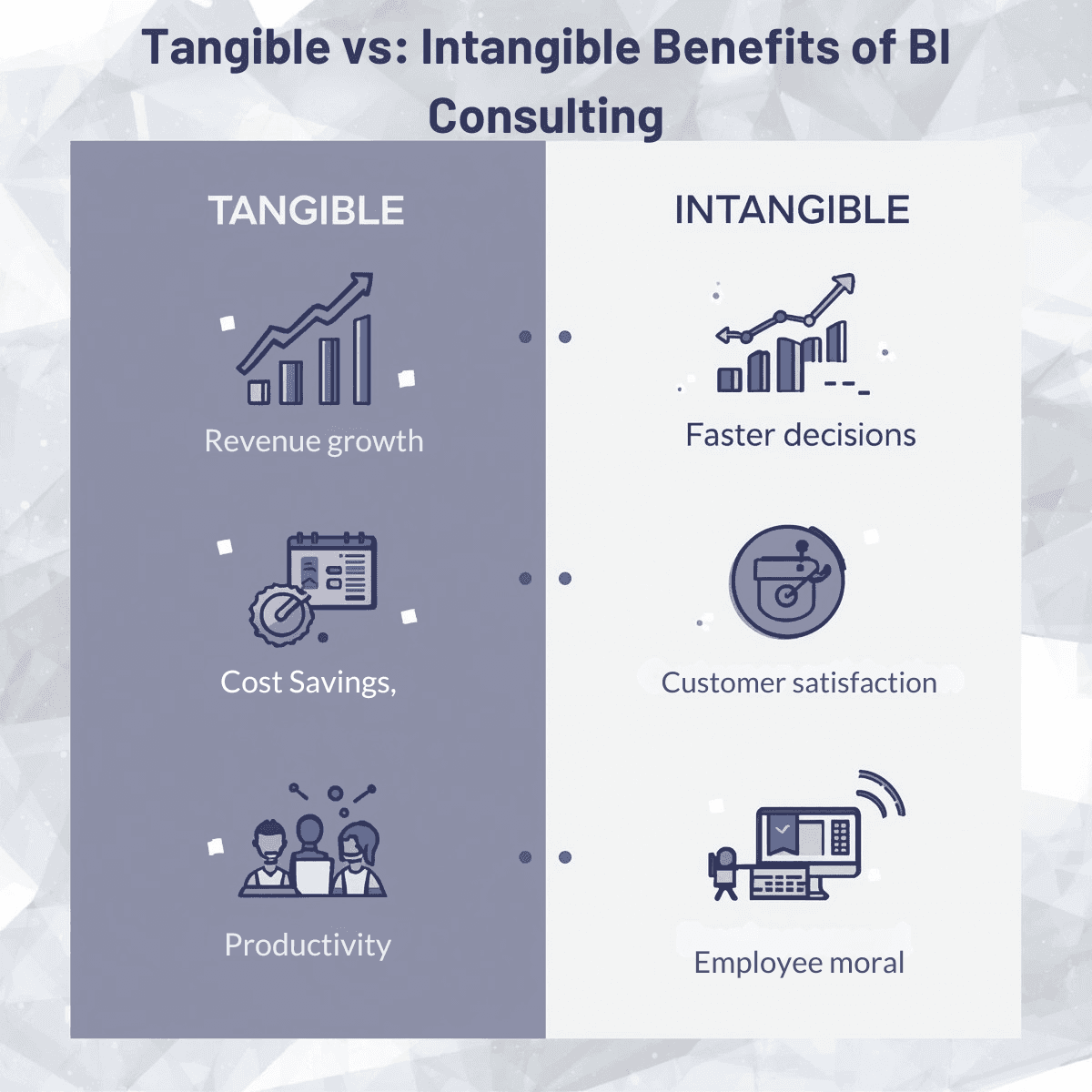
These are benefits that can be measured directly in monetary terms.
a) Increased Revenue Opportunities
BI insights can reveal cross-sell and upsell opportunities within CRM data.
Retailers often find optimal pricing points through analytics, directly boosting sales.
b) Operational Cost Savings
Automation of routine reporting tasks can reduce manpower requirements.
Better inventory forecasting can reduce carrying costs.
c) Improved Productivity
Decision-makers access unified dashboards instead of toggling between multiple systems.
Faster access to insights reduces lag between problem identification and solution implementation.
4. Intangible (But Crucial) Benefits
While harder to quantify, these benefits can dramatically affect business performance:
Faster decision-making
Enhanced customer satisfaction (via personalized experiences)
Better compliance and audit readiness
Higher employee satisfaction through reduced data frustration
5. Step-by-Step ROI Calculation Process
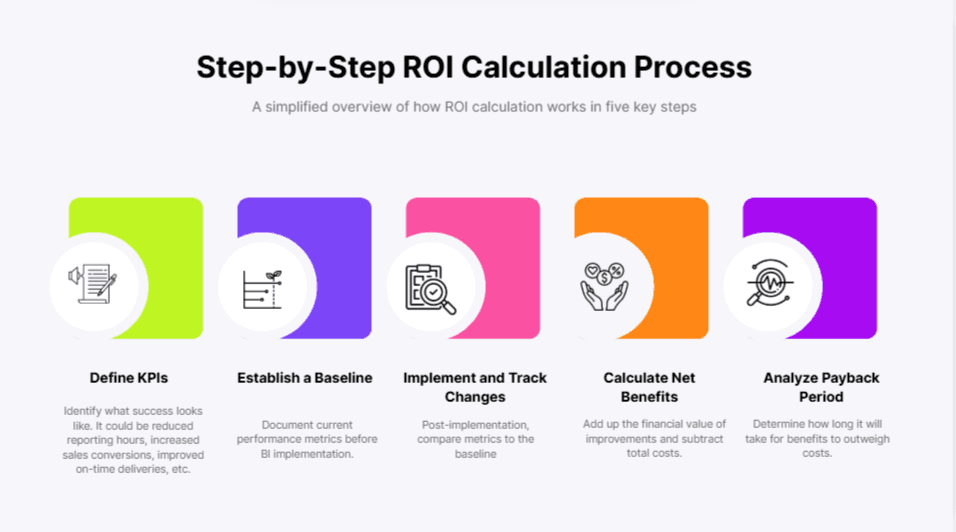
Step 1: Define KPIs
Identify what success looks like—could be reduced reporting hours, increased sales conversions, improved on-time deliveries, etc.
Step 2: Establish a Baseline
Document current performance metrics before BI implementation.
Step 3: Implement and Track Changes
Post-implementation, compare metrics to the baseline. For example:
Reporting time reduced from 15 hours to 3 hours/week = 12 hours saved × hourly wage × weeks/year.
Step 4: Calculate Net Benefits
Add up the financial value of improvements and subtract total costs.
Step 5: Analyze Payback Period
Determine how long it will take for benefits to outweigh costs.
6. A Retail Case Study
A mid-sized retail chain integrated its POS, ERP, and CRM systems using BI consulting services.
Costs:
BI consulting & integration: $120,000
Power BI Premium licenses: $40,000/year
Training: $10,000
Tangible benefits within 12 months:
Reduced stock-outs by 25%, increasing sales by $150,000
Reduced overstock by 15%, saving $80,000 in inventory costs
Cut reporting time by 70%, saving $25,000 in staff hours
ROI Calculation:
7. Common Pitfalls in ROI Calculation
Ignoring data quality issues: Poor data can undermine BI outcomes.
Overlooking change management: Without user adoption, benefits vanish.
Focusing only on financial ROI: Strategic advantages are equally important.
8. Making ROI a Continuous Metric
The ROI of BI is not a one-time figure—it should be revisited quarterly. Continuous improvement in data integration, analytics models, and user adoption can compound returns over time.
For businesses exploring how to ensure sustained ROI, reading our guide o
an help embed BI success into your organizational DNA.
Key Takeaway
Measuring the ROI of BI consulting and data integration services requires a blend of financial analysis and strategic thinking. By tracking both tangible and intangible benefits, aligning them with business goals, and revisiting ROI regularly, organizations can ensure their BI investments pay off—both in dollars and in competitive advantage.