In this guide, we’ll break down actionable steps SMBs and enterprises can take to make data the lifeblood of decision-making.
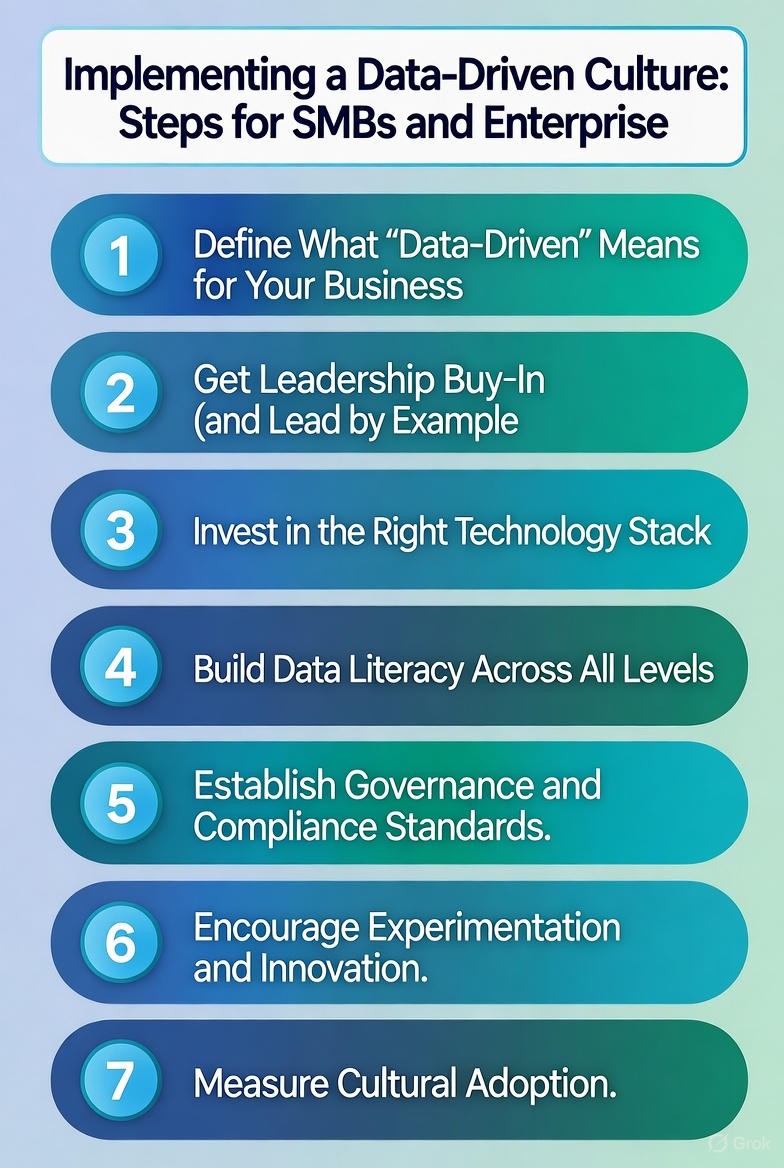
1. Define What “Data-Driven” Means for Your Business
Not every organization needs to operate like a Silicon Valley tech giant. For some, being data-driven might mean adopting real-time analytics dashboards to track KPIs. For others, it could be building predictive models to forecast sales or optimize supply chain performance.
Key Tip: Start with your business objectives, not the data tools. Once you know the questions you need to answer, you can determine whether you need data integration pipelines, a centralized data warehouse, or embedded analytics.
Related read: Data Integration vs. Data Warehousing- Understanding the Difference explores which foundation is right for your goals.
2. Get Leadership Buy-In (and Lead by Example)
Cultural shifts succeed when leaders champion the change. If executives make decisions without referring to data, the rest of the organization will follow suit. Conversely, when leadership demands evidence-based decision-making, teams adapt quickly.
Practical Ways to Drive Leadership Engagement:
Have quarterly executive dashboards in Power BI or another BI tool.
Review KPIs in every board meeting- no exceptions.
Allocate budget for BI consulting services to accelerate adoption and training.
Leaders should also regularly share data-driven wins, reinforcing the link between analytics and business success.
3. Invest in the Right Technology Stack
The tech you choose will shape adoption rates. SMBs may find Power BI’s affordability and Microsoft ecosystem integration ideal, while larger enterprises may opt for a hybrid BI approach involving ERP and CRM integration.
Your BI Stack May Include:
BI Platforms: Power BI, Tableau, Looker
Data Storage: Azure Synapse, Snowflake, Google BigQuery
Data Integration Tools: Azure Data Factory, Fivetran, Talend
Visualization Enhancements: Custom visuals, storytelling add-ons
If you’re unsure where to start, see Power BI Integration with ERP, CRM, and More for insights into connecting analytics with core business systems.
4. Build Data Literacy Across All Levels
You can’t have a data-driven culture if only your analysts understand the numbers. Data literacy training should be part of onboarding and ongoing development.
Training should cover:
How to interpret a dashboard
How to ask better business questions with data
Understanding basic statistics to avoid false conclusions
5. Establish Governance and Compliance Standards
As data access expands, so does the risk of misuse, breaches, or compliance violations. Establishing a data governance framework ensures data security, quality, and compliance with regulations like GDPR or HIPAA.
Your governance plan should outline:
Who can access which datasets
Data validation rules
Security measures for sensitive data
Audit trails and logging
Deep dive: Data Governance in Power BI: Security, Compliance, and Best Practices covers governance in BI platforms specifically.
6. Encourage Experimentation and Innovation
A data-driven culture thrives when teams are encouraged to explore hypotheses and test assumptions without fear of failure.
This means:
Allocating time for analytical deep-dives
Rewarding teams for uncovering insights that lead to process improvements
Allowing data teams to prototype solutions before full-scale rollout
7. Measure Cultural Adoption
Just like any transformation initiative, you need to measure progress.
Track:
Number of decisions supported by data
Percentage of employees actively using BI tools
Data literacy assessment scores
Frequency of dashboard updates and reviews
When adoption stalls, revisit training, leadership support, and ease of access to analytics.
Conclusion
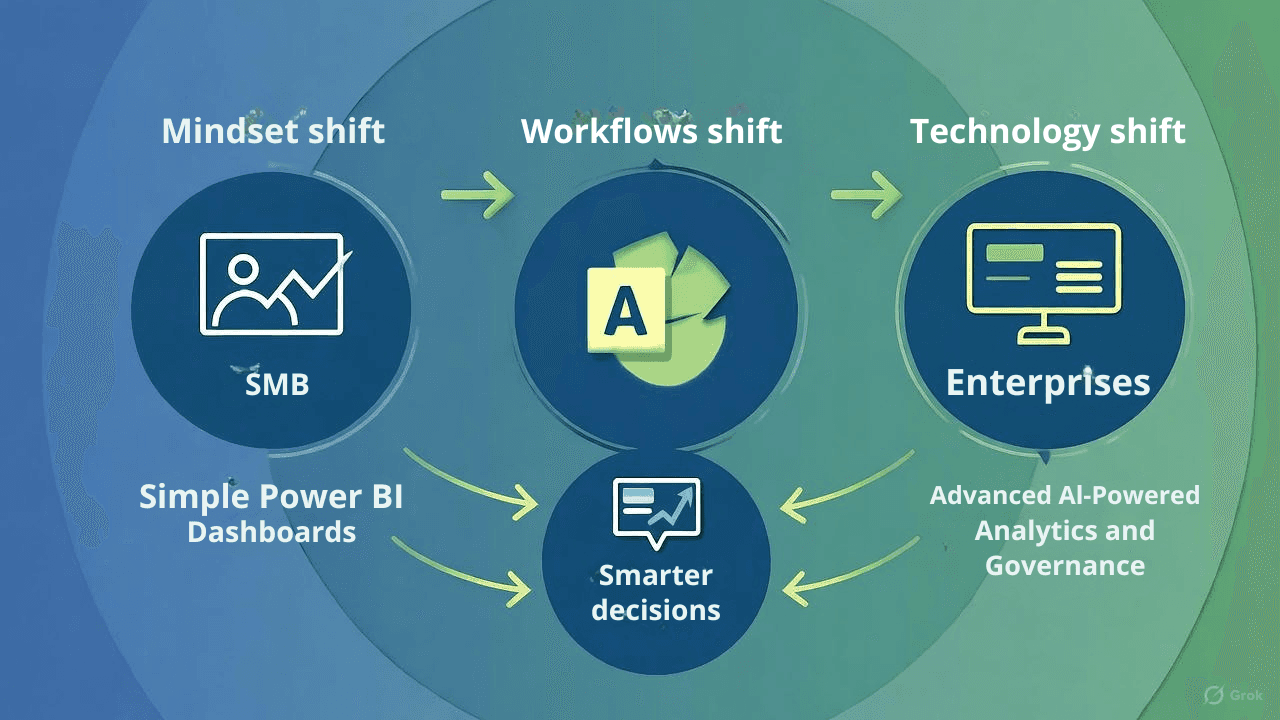
Implementing a data-driven culture isn’t a one-time project—it’s an ongoing shift in mindset, workflows, and technology use. For SMBs, this could mean integrating Power BI dashboards into daily operations. For enterprises, it might involve sophisticated AI-powered analytics and cross-departmental data governance frameworks.
Whether you’re starting small or undergoing a full digital transformation, remember: the goal is not just collecting data, but using it to make smarter, faster, and more confident decisions.
And as your BI maturity grows, you’ll find natural synergies with areas like augmented analytics trends, data integration strategies, and storytelling techniques—each of which strengthens the cultural shift toward data-driven excellence.