Understanding Intelligence Solutions in 2025
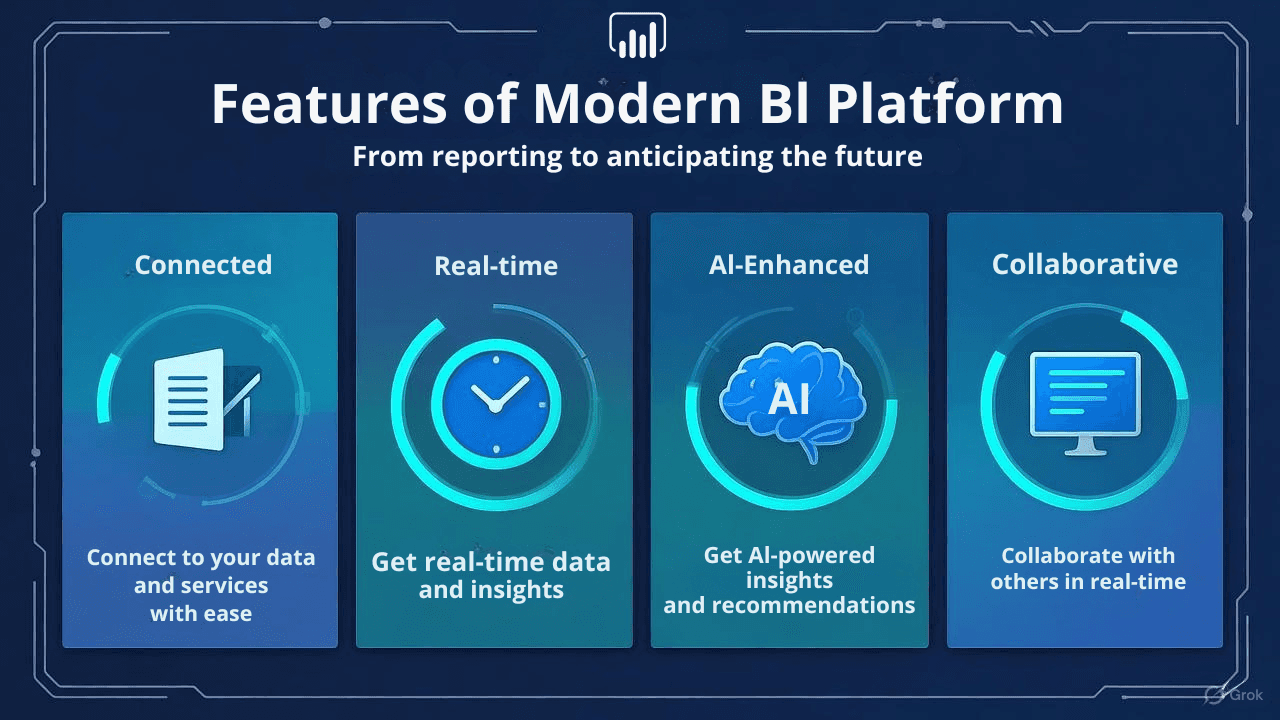
Intelligence solutions are integrated systems and tools that collect, process, analyse, and present business data in a way that supports strategic decision-making. Unlike older BI systems that required manual data preparation and produced static charts, modern BI platforms are:
Connected – pulling data seamlessly from ERP, CRM, marketing, and operational systems.
Real-time – reducing decision latency by providing up-to-the-minute data.
AI-Enhanced – automating insight generation through natural language queries and predictive modelling.
Collaborative – enabling shared dashboards, role-based access, and embedded analytics.
These solutions no longer just report on what happened — they anticipate what might happen next.
Core Components of Modern BI Intelligence Solutions
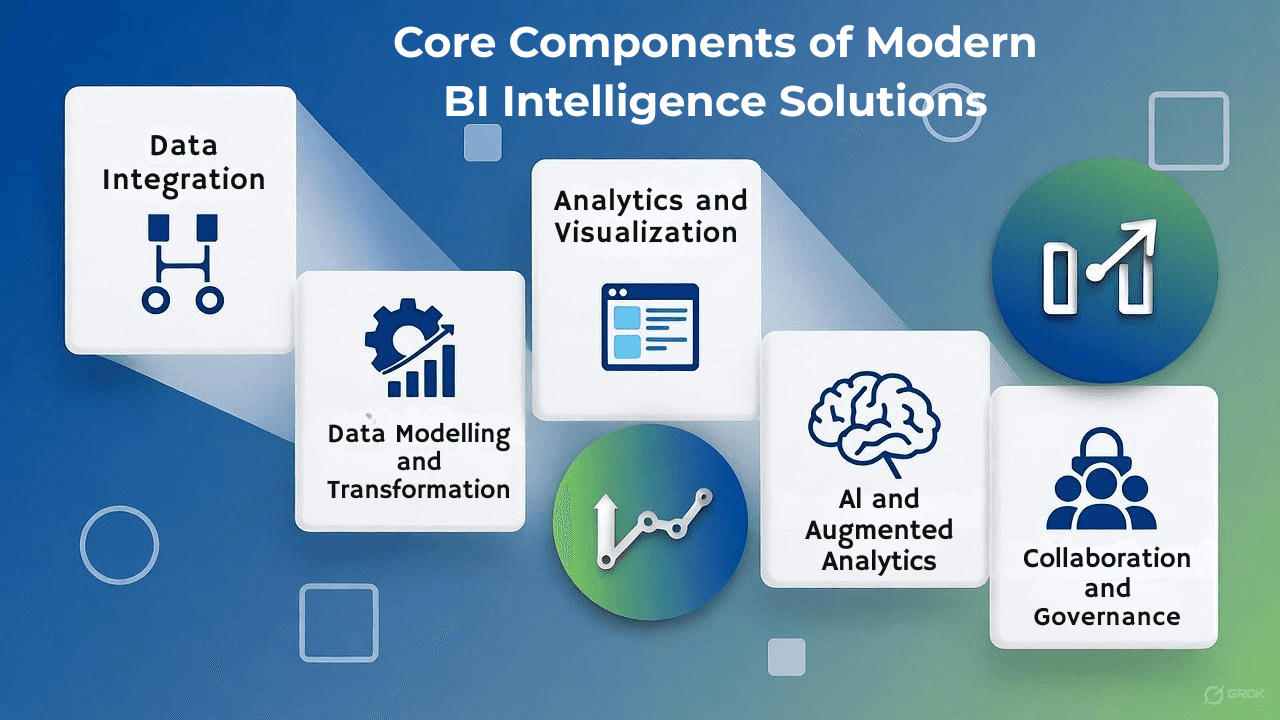
Modern BI solutions are built on several foundational components:
1. Data Integration
A BI platform’s value begins with how effectively it can connect to your data sources — from cloud-based CRMs like Salesforce to on-premises ERPs like SAP. For example, Power BI integration with ERP and CRM systems allows businesses to combine operational and customer data into a single view, helping departments collaborate on the same facts.
2. Data Modelling and Transformation
Tools like Power BI’s Power Query and Dataflows make it possible to clean, transform, and structure data without deep technical expertise. This creates consistent data definitions and prevents the “multiple versions of the truth” problem.
3. Analytics and Visualization
From interactive dashboards to AI-driven anomaly detection, visual analytics have become the face of modern intelligence solutions. Here, the design principles covered in our earlier piece on Power BI Best Practices for Marketing Analytics play a critical role — because even the most advanced analytics fall flat if stakeholders can’t interpret them quickly.
4. AI and Augmented Analytics
Recent BI trends for 2025 highlight the rise of augmented analytics, where machine learning automatically suggests correlations, detects outliers, and even drafts natural language explanations for your data. Microsoft Fabric’s integration with Power BI is pushing this even further by unifying analytics, governance, and AI into a single environment.
5. Collaboration and Governance
In regulated industries, BI tools must adhere to strict data governance frameworks to ensure security, compliance, and trust. This is where features like role-level security, audit logs, and encryption become essential — as explored in our Data Governance in Power BI guide.
Modern BI vs. Traditional BI: The Shift in Approach
Traditional BI was often IT-driven — analysts built reports, distributed PDFs, and updates came monthly or quarterly. Modern BI flips this model:
Traditional BI | Modern BI |
|---|---|
Centralised report creation | Self-service analytics |
Historical focus | Predictive and prescriptive focus |
Static reports | Interactive dashboards |
Long development cycles | Rapid deployment and iteration |
For example, with Power BI’s self-service model, a marketing manager can directly create a customer churn dashboard by pulling CRM data, applying a machine learning churn model, and sharing it in Microsoft Teams — no IT ticket required.
Choosing the Right Intelligence Solution
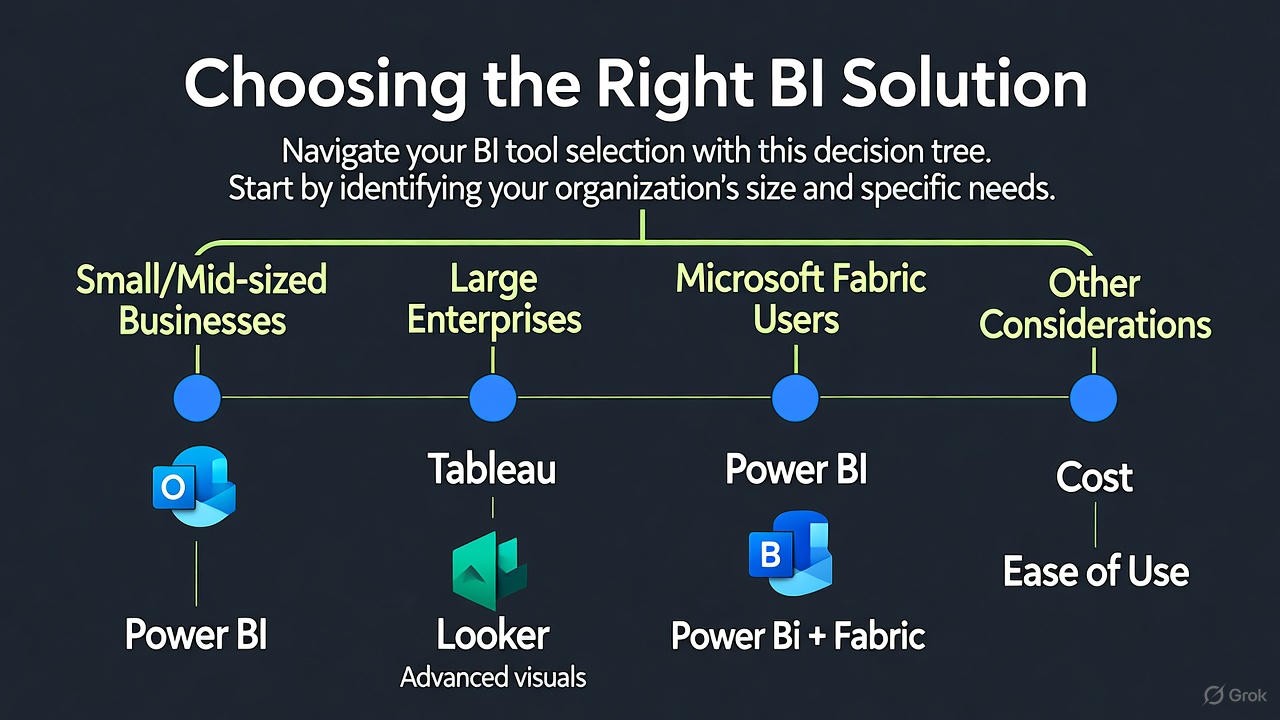
Selecting the right BI tool depends on your data maturity, team skills, and integration needs:
Small to mid-sized businesses often favour Power BI for its Microsoft ecosystem integration and cost-effectiveness.
Large enterprises with diverse tool stacks might opt for Tableau’s advanced visual capabilities or Looker’s semantic modelling.
Organisations already implementing Microsoft Fabric will naturally gravitate towards Power BI for its deep integration.
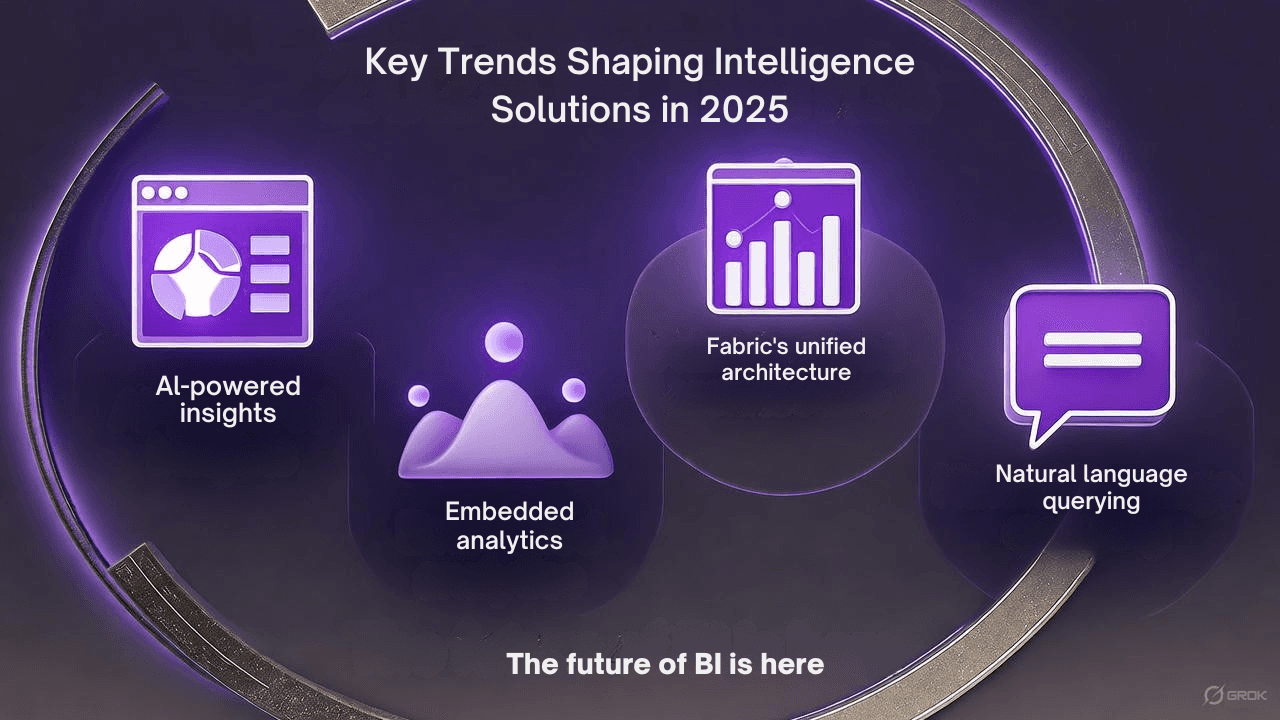
Key Trends Shaping Intelligence Solutions in 2025
Several developments are reshaping BI in 2025:
AI-powered insights becoming standard in dashboard design.
Fabric’s unified data architecture reducing siloed analytics.
Embedded analytics allowing BI visuals inside business apps.
Natural language querying enabling business users to “talk” to their data.
These trends aren’t just optional upgrades — they’re becoming table stakes for staying competitive.
Intelligence solutions in 2025 are no longer just about visualising past performance. They’re about integrating data, applying AI, and enabling every decision-maker in your organisation to work from a single, accurate, real-time version of the truth. Whether you choose Power BI, Tableau, or Looker, the right intelligence solution will unify your data strategy, support compliance, and accelerate insight-to-action cycles.